






查詢最新匯率,請致電 626-279-3235 聯繫外匯部。
May 13, 2026
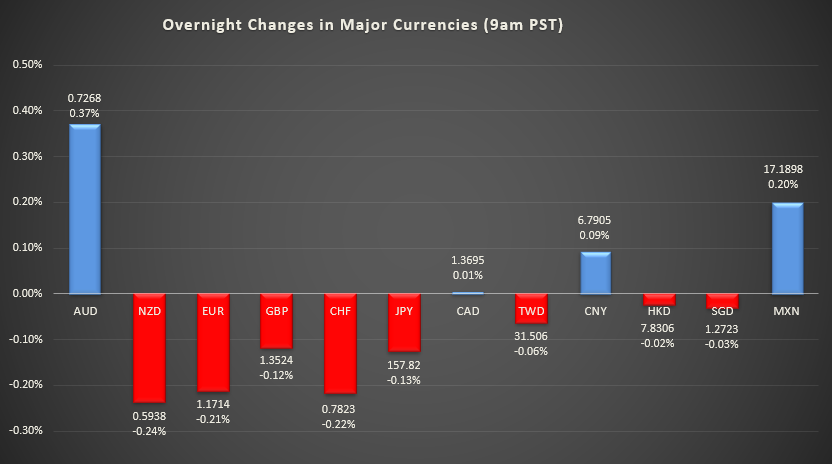
Following yesterday's consumer price inflation data, the Labor Department released a separate report on Wednesday showing producer prices in the U.S. shot up in April. The Labor Department said its producer price index for final demand jumped by 1.4% in April after climbing 0.7% in March.
The annual rate of growth in consumer prices soared to 6.0% in April from 4.3% in March and marked the fastest growth since a 6.4% spike in December 2022. The monthly increase in producer prices marked the largest advance since a 1.7% jump in March 2022.
Energy prices helped lead the way, peaking at 7.8% in April after soaring by 10.1% in March. The extended surge in energy prices accounted for more than three-quarters of the 2.0% jump in prices for goods.
There was a sharp increase in prices for services, which shot up by 1.2% in April after rising by 0.2% in March. Prices for transportation and warehousing services spiked by 5.0%, while prices for trade services surged by 2.7% and prices for other services crept up by 0.1%.
The Labor Department said core producer prices, which exclude prices for food, energy, and trade services, climbed by 0.6% in April after inching up by 0.2% in March. The annual rate of growth by core producer prices accelerated to 4.4% in April from 3.7% in March, surging at the fastest rate since a 4.5% spike in February 2023.
On Tuesday, the Labor Department released a separate report showing consumer prices in the U.S. increased in April. The Labor Department said its consumer price index (CPI) climbed by 0.6% in April after advancing by 0.9% in March. The annual rate of growth in consumer prices accelerated to 3.8% in April from 3.3% in March.
Excluding food and energy prices, the core consumer price index rose by 0.4% in April after inching up by 0.2% in March. The annual rate of growth in core consumer prices accelerated to 2.8% in April from 2.6% in March, coming in slightly for a 2.7% jump. 05/13/2026 - 10:06:00 (RTTNews)
Euro traded at 1.1714 against USD at 9:00 AM PST
The euro area economy expanded only marginally in the first quarter. Gross domestic product (GDP) posted a quarterly growth of 0.1% from the 0.2% expansion seen in the fourth quarter. On a yearly basis, GDP growth eased to 0.8% from 1.3% in the fourth quarter.
In the E.U. 27, sequential growth steadied at 0.2%. At the same time, annual growth slowed to 1.0% from 1.4%. Employment in the euro area edged up 0.1% compared to a 0.2% rise in the fourth quarter. The annual employment growth slowed to 0.5% from 0.7% a quarter ago. 5.05/13/2026 - 08:26:00 (RTTNews)
Eurozone industrial production grew at a steady pace in March. Industrial output grew 0.2% monthly in March, matching the growth rate seen in February. The monthly fall reflects a sharp 4.5% fall in non-durable consumer goods output and a 1.5% decrease in energy production.
Offsetting these declines, intermediate goods output rose 0.9%, and capital goods output rose 1.1%. Durable consumer goods production moved up 0.5%. Year-on-year, the decline in industrial production deepened to 2.1% in March from 0.8% in February. 05/13/2026 - 07:09:00 (RTTNews)
國泰銀行準備的此市場最新訊息僅供參考,不構成任何形式的法律、稅務或投資建議,也不應被視為對未來匯率變動或趨勢的保證或擔保。提供此信息時沒有考慮任何接收者的特定目標、財務狀況或需求。國泰銀行對本市場最新訊息的準確性、完整性或充分性不做任何表述或保證。
