




October 26, 2026
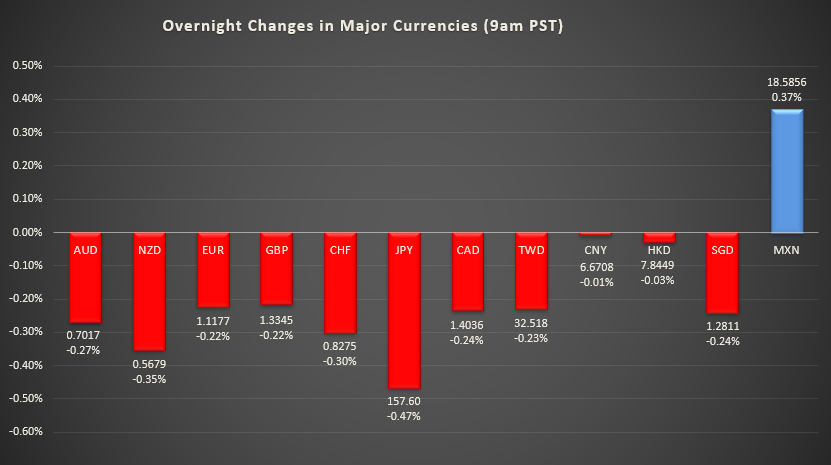
Euro traded at 1.1177 against USD at 9:00 AM PST
German business sentiment improved for the sixth month straight in October. The business sentiment index rose from 89.9 in September to 90.2 in October, marking the highest score since May 2023. However, companies assessed their current situation as slightly worse. The current situation indicator declined to 88.8 compared to 89.5 in September. The score was seen as 89.9.
Manufacturing improved significantly, with business confidence rising notably in October. Companies assessed both their current situation and expectations as substantially better, with both indicators returning to positive territory for the first time in more than three years. Service providers experienced a setback. Companies reported lower satisfaction with current business performance, though expectations improved. Business confidence in trade remained unchanged.
While trade companies viewed their current situation more negatively, their expectations improved slightly. In construction, sentiment improved as companies were noticeably more satisfied with their current business. Expectations also improved slightly. 10/26/2026 - 07:39:00 (RTTNews)
Spain's producer prices increased the most since late 2022 in September on energy prices. Producer prices grew 18.3% year-on-year in September, faster than the 13.2% increase posted in August. The rate was the highest since November 2022. Energy prices drove this acceleration, which climbed to 49.8%. Intermediate goods prices were up 7.5%. Capital and consumer goods prices rose 2.3% and 0.3%. Monthly, producer price inflation advanced from 2.9% in the previous month to 4.0%. 10/26/2026 - 08:47:00 (RTTNews)
British Pound traded at 1.3345 against USD at 9:00 AM PST
United Kingdom retail sales declined at the slowest pace since April 2025. The retail sales balance rose to -10% in October, the highest since April 2025, from -55% in September. About 3% of respondents judged retail sales for the time of year to be below "average" in October compared to -40% in September. Online retail sales volumes contracted in October, but the balance rose from -68% in September to -39%. Although the online retail sales downturn eased in October, the outlook remains fragile as businesses face headwinds from cautious household spending and higher fuel costs. 10/26/2026 - 08:02:00 (RTTNews)
Singapore's industrial output growth eased notably in September due to the sharp contraction in biomedical manufacturing. Industrial production expanded 3.4% year-on-year in September, much slower than the 15.4% increase seen in August. Excluding biomedical manufacturing, industrial output growth eased from 16.8% in August to 9.0%. Biomedical manufacturing posted an annual contraction of 32.8%. Manufacturing output shrank 3.9% monthly after easing 1.0% a month ago, marking the second consecutive fall. 10/26/2026 - 02:29:00 (RTTNews)
This market update is prepared by Cathay Bank for informational purposes only and does not constitute any form of legal, tax or investment advice, nor should it be considered an assurance or guarantee of future exchange rate movements or trends. This information is provided without regard to the specific objectives, financial situations or needs of any recipient. Cathay Bank does not make any representations or warranties about the accuracy, completeness or adequacy of this market update.
Our specialists are happy to assist you with all your International Banking needs. Please reach out to our team for more information.
